
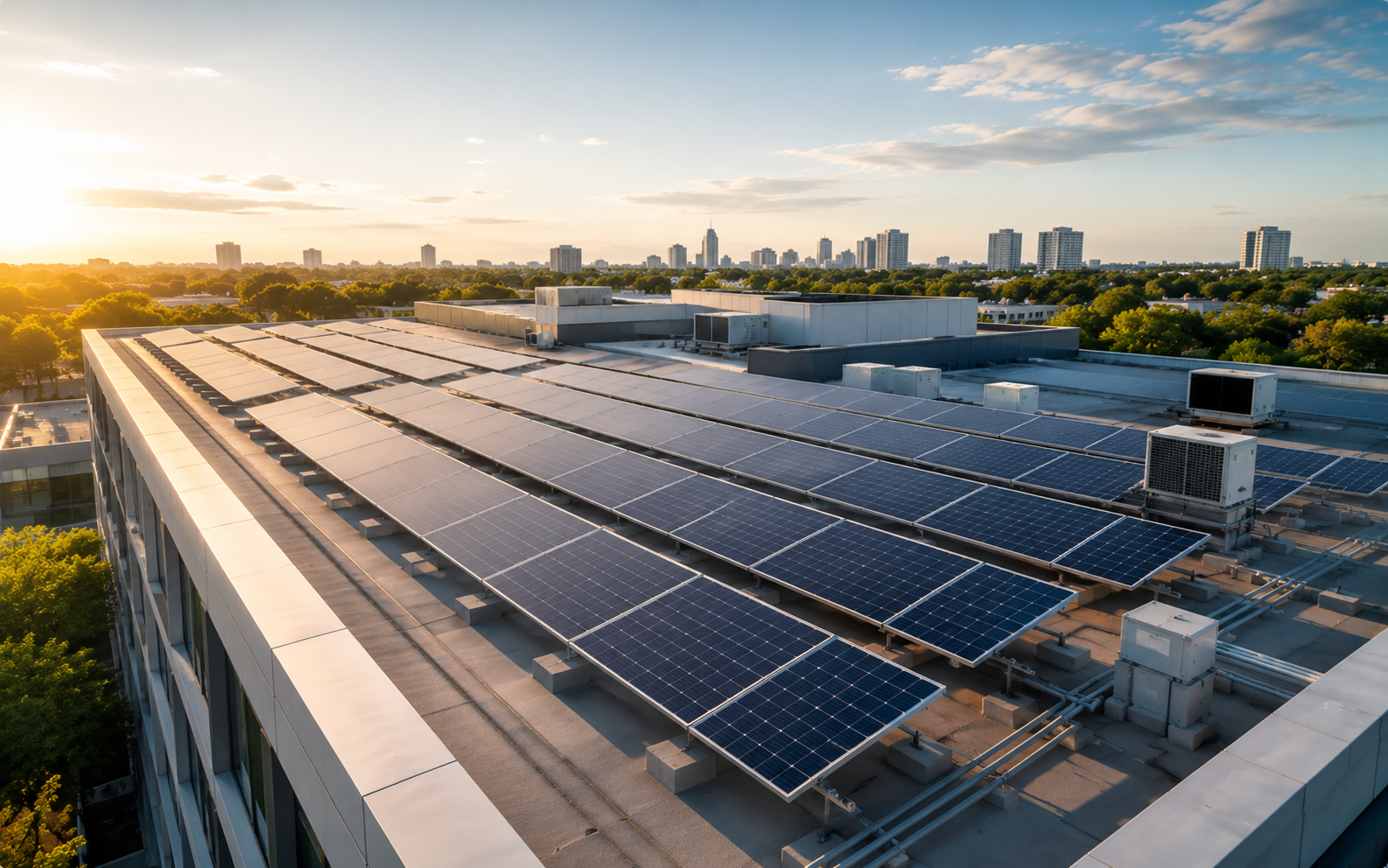
Gujarat has long been India's solar powerhouse, and in 2026 the momentum shows no signs of slowing. Whether you own a home, run a business, or manage an industrial facility, the economics and policy landscape have never been more favourable for making the switch to solar.
The Policy Tailwind: PM Surya Ghar Yojana
Launched in early 2024 and now operating at full scale, the PM Surya Ghar Muft Bijli Yojana provides direct subsidies of up to ₹78,000 for rooftop solar installations for residential users. The scheme targets one crore households nationally, and Gujarat's distribution companies (DISCOMs) have streamlined the application process significantly in 2026, reducing approval timelines from several months to as little as three to four weeks in urban areas.
Falling Costs, Rising Returns
The cost of solar panels has dropped by more than 60% over the past five years. A typical 3 kW rooftop system in Gujarat — sufficient for an average home — now costs between ₹1.5 lakh and ₹2 lakh fully installed, after subsidies. With electricity tariffs in Gujarat averaging ₹5–7 per unit for residential consumers, most homeowners recover their investment within four to six years and enjoy free power for the remaining 20+ year lifespan of the system.
For commercial and industrial units, the payback period is even shorter — typically two to four years — because commercial tariffs are higher and there is no subsidy cap limiting system size.
Net Metering: Sell What You Don't Use
Gujarat's net metering policy allows solar users to export surplus power back to the grid and receive credit on their electricity bill. As of 2026, the state's net metering regulations permit bi-directional metering for systems up to 1 MW, making it practical for both homeowners and businesses to optimise their returns without worrying about wasted generation during low-consumption periods.
Domestic Manufacturing Requirements
New domestic content requirements, phased in from mid-2025, mandate that solar modules used in government-linked schemes must use cells manufactured in India. While this has marginally increased the price of modules covered under PM Surya Ghar, it has also strengthened the local supply chain and reduced long-term import risk — meaning the solar ecosystem in Gujarat is more stable and self-reliant than at any point before.
What You Should Do Now
- Assess your roof: A south-facing, unshaded roof of 100 sq ft can support approximately 1 kW of panels. Most homes in Gujarat can fit 3–6 kW systems comfortably.
- Get a free survey: A professional site assessment will give you an accurate estimate, including shading analysis, structural evaluation, and a detailed ROI projection.
- Check subsidy eligibility: Residential consumers with a valid electricity connection and a meter in their name qualify under PM Surya Ghar. Your installer can help file the application.
- Compare installers: Look for MNRE-empanelled installers with experience in your area. Always ask for references and a written warranty covering both panels (25 years) and inverters (5–10 years).
The Bottom Line
Between government subsidies, falling hardware costs, strong net metering policy, and Gujarat's excellent solar irradiance (averaging 5.5–6 peak sun hours per day), the case for going solar in 2026 is compelling. Those who install now lock in today's low equipment costs and begin earning returns immediately, while those who wait will face higher tariffs and potentially stricter grid connection rules as rooftop solar becomes increasingly mainstream.
Vinara Solutions offers free site surveys across Gujarat and Maharashtra. Our team handles everything from design and subsidy paperwork to installation and after-sales support — so you can go solar without the complexity.