
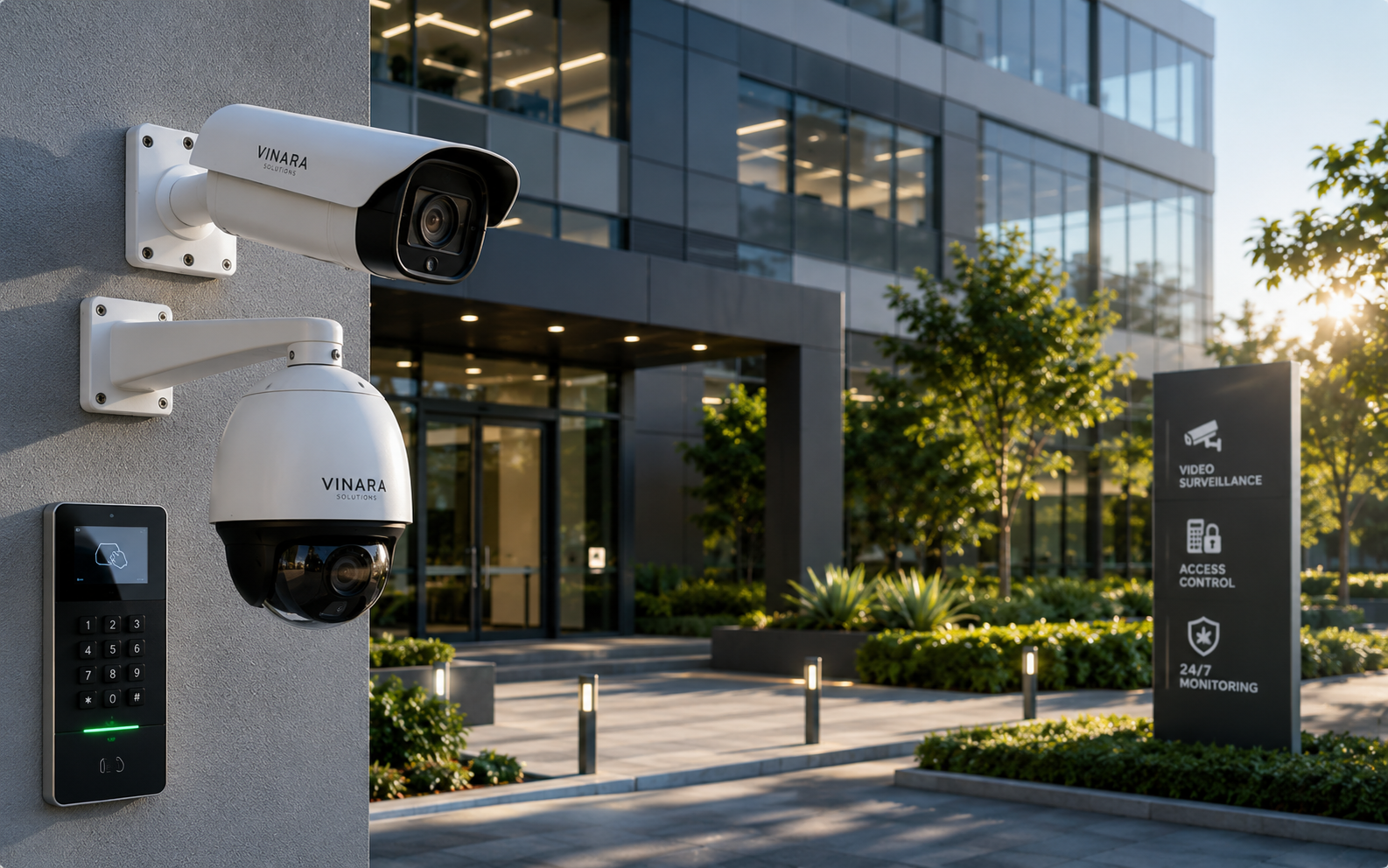
The security landscape for Indian businesses has changed dramatically in the past five years. What was once a matter of placing a few cameras at entry points has evolved into a comprehensive, intelligent surveillance ecosystem that actively reduces risks, streamlines operations, and delivers measurable ROI well beyond traditional security outcomes.
From Analogue to IP: Why the Shift Matters
The transition from older analogue CCTV to modern IP (Internet Protocol) camera systems is now essentially complete for any new installation. IP cameras deliver significantly higher resolution (2 MP to 8 MP as standard, with 4K becoming common), flexible installation over standard network cabling, remote access from anywhere via smartphone or desktop, and the ability to run AI-based video analytics locally on the camera or edge device — without sending footage to the cloud.
For industries, the practical implications are significant. A 4 MP IP camera can clearly capture a vehicle number plate at 15–20 metres, or facial detail at 5–8 metres — tasks that were impractical with standard-definition analogue systems. This resolution gap is particularly important for post-incident investigation, where image quality is often the difference between actionable evidence and unusable footage.
AI-Powered Video Analytics
The most transformative development in surveillance over the past three years has been the widespread availability of AI-based video analytics — no longer only for large enterprises with dedicated video management teams, but built into mid-range IP cameras as standard features. Practically useful analytics now available even in sub-₹10,000 cameras include:
- Intrusion detection: Alerts when a person or vehicle enters a defined zone outside working hours
- Line crossing detection: Monitors perimeters and restricted areas in real time
- Loitering detection: Flags individuals who remain in a sensitive area longer than a set time
- Crowd density monitoring: Useful for retail, events, and public facilities
- Automatic number plate recognition (ANPR): For vehicle access control without human intervention
- PPE detection: Identifies workers not wearing helmets, vests, or other safety equipment — increasingly important for factory and construction site compliance
Integration with Access Control
Modern security systems work best when CCTV and access control are integrated on a single platform. When a card reader or biometric terminal grants or denies access at a door or gate, the VMS (Video Management System) automatically retrieves the camera footage for that exact moment — giving security teams a complete, time-stamped record of who entered where, and what happened at that moment. This integration eliminates the hours previously spent manually searching through footage to match access logs.
For industrial facilities, integration with production or ERP systems adds another dimension — tracking movement of materials, monitoring loading bays, and correlating camera events with inventory or production records.
Remote Monitoring and Centralised Management
One of the most practically valuable aspects of modern IP surveillance is the ability to monitor multiple sites from a single location. A security team at a central operations room can view live and recorded footage from factories, warehouses, retail outlets, and offices across the country on a single screen. Mobile apps allow management and security personnel to check live feeds or receive real-time alerts from anywhere, at any time.
For businesses with multiple sites but limited security headcount, centralised remote monitoring significantly improves coverage without proportionally increasing staffing costs.
Compliance and Insurance Benefits
Many industry sectors — pharmaceutical, food processing, financial services, and government-contracted manufacturing — now require documented surveillance systems as a condition of compliance or contract. Beyond regulatory compliance, insurers increasingly offer reduced premiums for facilities with certified, maintained CCTV systems. The cost savings on insurance can meaningfully offset the investment in better surveillance infrastructure.
What to Look for in a Surveillance System
- Resolution and low-light performance: Specify camera resolution based on the identification task required at each location, not just coverage area. Ensure cameras include good low-light capability (look for specifications like "starlight" or "colour night vision") for 24-hour coverage.
- Storage adequacy: Calculate required storage based on camera count, resolution, frame rate, and retention period (30 days minimum is standard for most industries). Network Video Recorders (NVRs) with RAID redundancy protect against drive failure.
- Cybersecurity: IP cameras are networked devices and must be treated as such. Ensure firmware is regularly updated, default passwords are changed, cameras are on a segregated network VLAN, and remote access is secured with two-factor authentication.
- Scalability: Your surveillance system should be designed with room to grow — additional camera positions, wider analytics licences, and integration with future access control or alarm systems.
Vinara Solutions designs, supplies, and installs IP surveillance systems for industrial, commercial, and residential applications across Gujarat and Maharashtra. Our systems are backed by a dedicated after-sales support team and preventive maintenance programmes to ensure your cameras never go dark when you need them most.